
How we think about AI
We don't replace people with computers.
AI is good at volume: the recall, the drafting, the follow-up nobody has time for. People are good at the parts that keep customers: judgment, reading a room, making someone feel taken care of. The best results come from putting each on the work it does best.
So we don't aim to cut your team. We take the busywork off your best people and point that recovered time at growth. This is not a hunch. Pairing people with AI on the right work beats either one alone, but only when a person stays in the loop on the judgment calls, and it can backfire when they do not.
Chimera model · who does what
AI handles
- Recall and retrieval
- Drafting at volume
- Follow-up at scale
- Pattern recognition
- Routine analysis
People handle
- Reading a room
- Judgment calls
- The hard edits
- Building trust
- Closing the deal
Each on the work it does best. The blend wins.
Inside AI's frontier, consultants using it did 12% more work, 25% faster, at higher quality. Pushed onto work outside that frontier, they were 19% more likely to be wrong. The human has to know which is which.
Across 106 studies, the human-AI blend was not automatically better than the best of either alone. It won on creative, generative work and lost when people handed decisions over. The combination has to be built with care.
Given an AI assistant, support agents resolved 14% more issues an hour, and the newest agents 34% more, as the tool spread the best people's habits to the whole team. AI lifted the people, most of all the ones still learning.
In a controlled trial, developers given an AI assistant finished the task 56% faster than those without one, and the least experienced gained the most. Same pattern: AI augments the person, it does not replace them.
Why we're different
Everyone with a ChatGPT tab is suddenly an AI consultant.
Right now there are a hundred podcasts and YouTube channels convincing anyone with a ChatGPT login that they can charge you thousands to paste your problem into a chatbot. Most of it is a markup on something you could do yourself, sold by someone who has never run a business like yours and has no idea whether it will pay.
We do the opposite. We do not sell you AI. We find where your business actually leaks money, put a real number on it from your own books and named public data, and tell you plainly when the honest answer is a cheap off-the-shelf tool, or nothing at all. We build only what pays, hand you the math so you can check every dollar, and leave you owning all of it.
How to tell us apart
- A number before a pitch. We size the problem from your own books and named sources before we recommend a thing.
- We tell you where not to spend. Including the fixes you can do yourself and the tools we do not sell.
- You own all of it. Everything deploys into accounts you control. No lock-in, and nothing runs on our servers.
- Every figure is sourced and graded. You, your accountant, or your skeptical partner can re-check the math.
If we are not the right fit, we tell you on the first call.
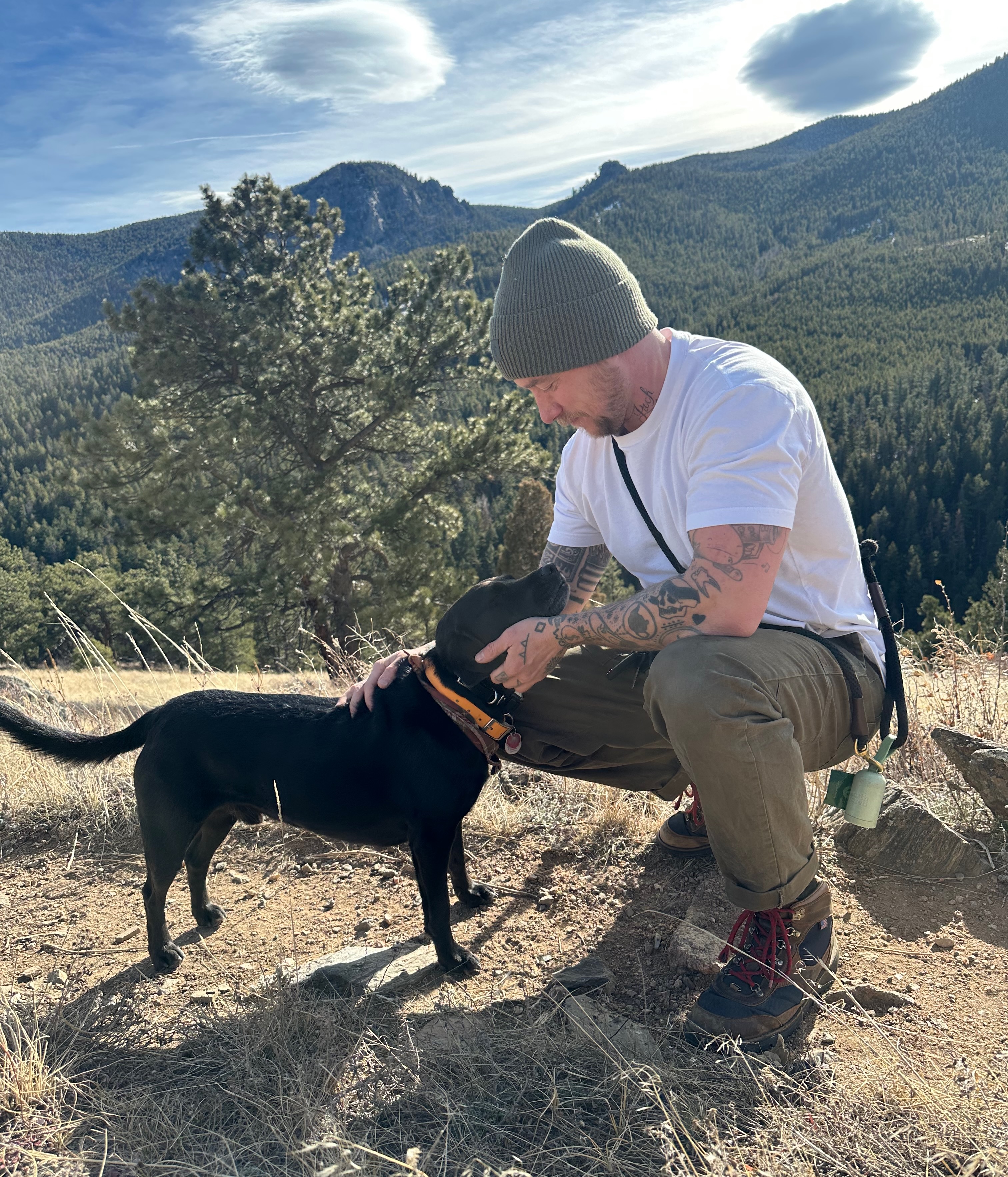
About the founder
My mission is to help small businesses win.
Sam Stuckey · Founder & principal engineer
Before Front Range Intelligence I spent more than a decade building back-end systems at scale. I've built payments and subscriptions for companies like Lululemon and Big Cartel, and safety-critical tooling for the Department of Veterans Affairs, where a system I designed helped recover over $70 million in veterans' benefits that had been failing silently. Now I build AI for small businesses, and I do it hands-on. The research, the math, and the automations are mine, not a subcontractor's. My mission is to help SMBs and blue-collar owner-operators embrace the good parts of AI, and avoid the pitfalls.